
Genealogical research
Search the archives
We find documents of your ancestors, even if all that remains of your family history is your name and the name of your village.
We verify each record and obtain official copies that can be submitted for citizenship, inheritance, or to compile a family tree.
Search the archives
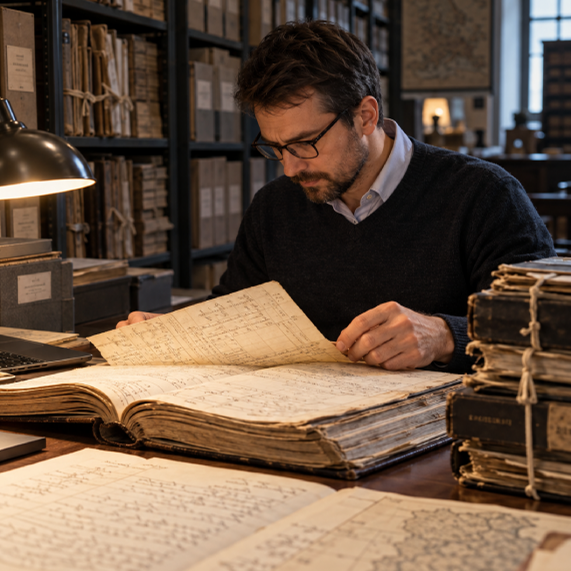
Each type of archive answers its own questions, and documents from one family are often scattered across multiple archives and even countries. We determine which holdings your family needs, where they are stored today, and work with them directly. You don't need to go anywhere or write requests.
How we work
Documented experience
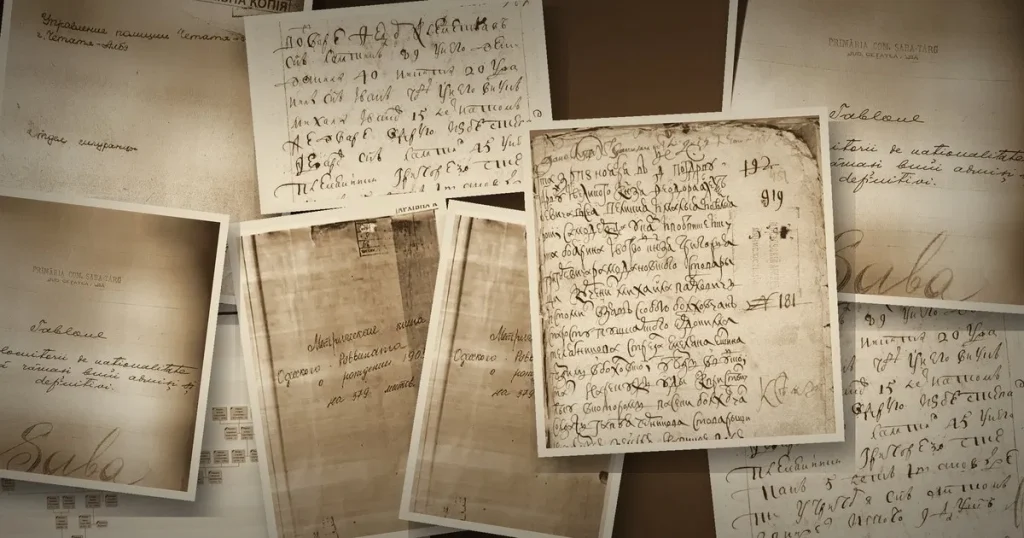
Over 10 years We work with state, church and military archives of different countries and eras. We know how borders, village names and administrative divisions changed. Therefore, we first establish which province, county or parish the required place belonged to in a specific year, and only then do we search in those funds where the documents are actually stored.
We work with pre-revolutionary registry books of churches, synagogues, and cathedrals, as well as with Soviet civil records. We link people between them by name, patronymic, age, and address, so that there are no gaps in the family line. We read cursive from the 17th–18th centuries, pre-reform spelling, and documents in Romanian and Polish.
For example, for a client from Bessarabia, we found a file from 1935 with lists of residents who received Romanian citizenship, and he received Romanian citizenship. In Odessa, the records of the rabbinate's registry book for 1905, together with Soviet acts, confirmed the family's Jewish origin. And in the Kharkiv region, from scant information about one grandfather, we reached records from 1732 and documents from the 17th century.
We do not take any connection for granted. We check each fact against several sources, and the result is officially formalized: archival extracts, translation, apostille. We do not assume - we prove.
Frequently asked questions
Start with what you know.
The ancestor's name, approximate years of life, and location are enough to get you started.
Before we start, we will tell you which archives to search in and which documents you can actually obtain.